
If you’re comparing “the best tactical knife steels” in 2026, you’re really trying to avoid one thing: buying a blade that looks capable on paper but disappoints when it matters—chipping on hard use, rusting in humidity, or turning sharpening into a weekend project. This comparison breaks down today’s most relevant steel types by the traits that actually show up in the field: toughness, corrosion resistance, edge stability, and real-world maintainability. You’ll also see why steel choice is only half the story, and how performance-verified blades—like the combat-ready katanas built under Sword Market’s controlled design-to-forging system—reduce the “unknowns” that make blade buying feel like a gamble.
Why Tactical Knife Steel Choice Matters in 2026
Knife steel has never been more confusing than it is now. Powder metallurgy stainless steels are mainstream, “ultra corrosion-proof” alloys are no longer exotic, and makers can hit very different results with the same steel depending on heat treatment and edge geometry. That’s why two knives both labeled “CPM MagnaCut” can behave differently when you’re batoning kindling, scraping a ferro rod, or doing dirty utility cuts on abrasive material.
The other 2026 reality is that more people buy blades online than in person. You can’t feel the grind, inspect the edge, or judge how solid the build is until it arrives. Marketing tends to lean on steel names because they’re easy to compare, while the harder-to-see factors—heat treat consistency, geometry, assembly, and final inspection—quietly decide whether a blade stays trustworthy over years of use.
That’s also why experienced users talk about “risk control” more than hype. It’s less about chasing the single “best steel” and more about matching steel type to your environment and abuse level, then choosing a brand that can explain and verify how that steel is processed. The same logic applies whether you’re buying a tactical fixed blade or stepping up to a longer, higher-stress weapon platform like a functional katana.
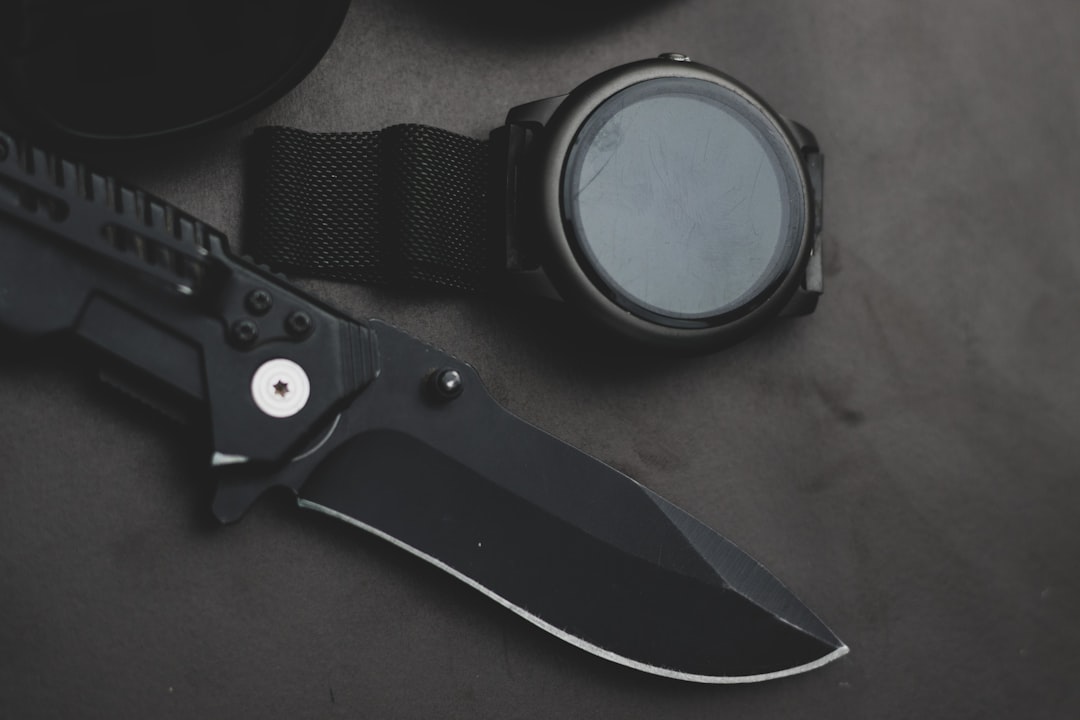
Unsplash
Comparison Table: Tactical Knife Steel Types (2026)
| Steel type (common examples) | Corrosion resistance | Toughness | Edge retention (wear) | Sharpening feel | Where it shines | Common trade-off |
|---|---|---|---|---|---|---|
| Balanced PM stainless (CPM MagnaCut) | High | High | High | Moderate | One-knife “do most things” tactical builds | Price and heat-treat variance between makers |
| High-toughness PM tool steel (CPM 3V) | Low | Very high | Medium | Moderate | Hard-impact field knives; batoning and prying tolerance | Rust management is non-negotiable |
| Tough PM “semi-stainless” tool steel (CPM CruWear) | Medium | High | High | Moderate | Workhorse tactical knives that see dirty cuts | Still needs care in wet/salty use |
| High-wear PM stainless (M390 / 20CV / 204P) | High | Medium | Very high | Harder | EDC/tactical crossover where long slicing matters | Can feel “chippy” if geometry/HT are aggressive |
| Ultra-corrosion stainless (Vanax, LC200N) | Very high | Medium–high | Medium | Moderate | Coastal, maritime, sweaty carry, constant wet environments | Often costs more; edge retention isn’t the main flex |
| Mid-tier stainless (S35VN / S45VN / Elmax) | High | Medium | High | Moderate | Reliable “premium” category with broad maker support | Not the toughest choice for abusive impacts |
| Budget stainless with good behavior (14C28N, AEB-L) | High | Medium | Medium | Easy | Practical users who sharpen often and want predictable edges | Won’t match PM steels in sustained wear resistance |
| Classic “value” tool steel (D2) | Medium | Low–medium | High | Moderate–hard | Budget hard-use cutters when heat treat is solid | Chipping and corrosion can surprise people |
| Simple carbon steels (1095, 1084) | Low | Medium | Medium | Easy | Field knives where easy maintenance matters more than “specs” | Rust and patina are part of ownership |
| Spring steels (5160, 9260) | Low | High | Medium | Easy–moderate | Impact-tolerant blades; also common in functional swords | Edge retention is not “PM-level” |
Comparison Analysis: Which Steel Type Is “Best” Depends on the Job
People ask for the “best” tactical knife steel as if it’s a single winner, but tactical use is a bundle of different abuses. A knife that lives in a wet vehicle kit has a different mission than a blade used for training classes, breaching tasks, or long weekends in the woods. Steel choice starts to make sense when you think in failure modes: rust, chipping, rolling, snapping, or simply losing bite too quickly.
CPM MagnaCut: the modern baseline for balanced tactical performance
MagnaCut has earned its reputation because it refuses to be a one-trick pony. It brings strong corrosion resistance without giving up the toughness that many stainless steels struggle to maintain. For a tactical knife that might do everything from food prep to dirty utility cuts to light batoning, this balance is why it often feels like the “safe” premium choice in 2026.
The catch is that MagnaCut is not a magic spell—heat treatment and geometry still decide whether it feels confident or fragile. If a maker pushes hardness and runs a very thin edge for slicing performance, you can still see micro-chipping on staple-laden cardboard or gritty rope. When the blade is tuned for field abuse, it tends to reward you with stable edges and less anxiety around moisture.
CPM 3V: when you prioritize impact tolerance over rust resistance
3V is the steel people point to when they want a knife to take hits without drama. If your reality includes batoning knotty wood, digging, or “this tool might get abused” moments, 3V has the toughness profile to make sense. Many users accept more frequent touch-ups because the blade survives impacts that can punish harder, wear-focused steels.
You pay for that toughness with corrosion management. If you sweat on your gear, operate in rain, or store the knife in a humid environment, 3V asks for the kind of care that stainless users aren’t always willing to give. In practice, 3V is brilliant for hard-use training and field work, less ideal for a blade that lives wet.
CPM CruWear: a practical “work steel” that can still feel premium
CruWear sits in a sweet spot for many tactical users: tough enough to handle real work, wear-resistant enough to keep cutting, and generally less prone to the sudden brittle feel some high-carbide stainless steels can show when pushed. If you’re the kind of user who cuts dirty materials, hits the edge on unexpected staples, and wants a steel that forgives minor mistakes, CruWear often makes people happy.
It’s commonly called “semi-stainless” in the way people talk about it, but that can lull buyers into sloppy maintenance. CruWear is far more forgiving than plain carbon steels, yet it’s not your best friend around saltwater. If you’re coastal or working in constant humidity, you’ll feel the difference compared with true stainless options.
M390 / 20CV / 204P: long-wearing stainless that rewards controlled use
These steels dominate the “high-end stainless” category because they can keep slicing for a long time. If your tactical knife is also your daily cutter—packaging, straps, zip ties, long sessions on abrasive media—this family has a clear advantage. You’ll often see less frequent sharpening, and the edge can keep a crisp bite when the heat treat is done well.
The trade-off shows up under impact and lateral stress. If a knife is ground thin behind the edge, or if the heat treat is pushed hard, these steels can chip rather than roll. Users who treat a knife like a pry bar tend to be happier with tougher steels, while users who treat it like a cutting tool tend to love M390-class steels.
Vanax and LC200N: “don’t worry about rust” steels for real wet environments
If you’ve ever pulled a knife from a pack after a humid trip and found orange freckles, the appeal of Vanax or LC200N is obvious. These steels are built for corrosion resistance that’s not just theoretical. For maritime work, fishing kits, coastal carry, and high-sweat conditions, this category reduces maintenance burden in a way that changes day-to-day ownership.
You’re not choosing these because you want the longest edge retention in the world. You’re choosing them because your environment punishes steel, and you’d rather spend your time using the tool than babying it. For many professionals and outdoors users, that’s the “best” definition that matters.
S35VN / S45VN / Elmax: dependable premium steels with broad support
These steels remain popular because they behave predictably and are widely understood by makers. In real use, they can offer a satisfying mix of stainless comfort, decent edge retention, and manageable sharpening—especially for users who don’t want to chase the newest alloy every year. They also show up in enough knife models that you can be picky about handle design, sheath systems, and overall ergonomics without sacrificing steel quality.
Where they fall behind is on the extremes. If you want the toughest blade possible, you’ll lean toward 3V-class toughness. If you want ultra corrosion resistance for constant wet exposure, you’ll lean toward Vanax/LC200N. For most “normal” tactical use, these steels are still an easy yes.
14C28N and AEB-L: underrated steels for people who actually sharpen
There’s a reason many experienced users keep a knife in these steels even when they own “better” alloys. They’re friendly to sharpen, can take a clean edge, and tend to behave with less surprise than some carbides-heavy steels when the edge gets thin. If you’re the person who touches up edges regularly and wants predictable performance rather than bragging rights, this category is a smart buy.
They won’t match PM steels in sustained wear resistance on highly abrasive tasks, but they often outperform their reputation in everyday and training contexts because the edge stability is so user-friendly.
D2 and simple carbon steels (1095): value choices that demand clear expectations
D2 can deliver strong wear resistance for the money, but it’s not the “cheap miracle steel” some ads imply. It’s more prone to chipping than tougher options, and corrosion resistance is easy to overestimate. If you know what you’re buying and you pick a maker with a proven heat treat, D2 can be a solid budget hard-use cutter. If you expect stainless behavior, you’ll be disappointed.
Plain carbon steels like 1095 remain popular in fixed blades because they’re easy to heat treat well, easy to sharpen, and easy to repair in the field. They rust—no way around it—but plenty of people accept that because they want a straightforward tool that they can maintain anywhere.
Spring steels (5160, 9260): also relevant when “tactical” means longer blades
Spring steels show up in hard-use knives, machetes, and functional swords because they tolerate shock and flex. If you’re comparing steel types for “tactical blades” beyond pocketable knives—camp choppers, survival blades, and training weapons—this category is worth understanding. You won’t get the high-wear edge retention of PM stainless, but you get durability that makes sense when the blade length and impact loads rise.
This is where the conversation naturally overlaps with functional katanas: the longer the blade, the more geometry, heat treatment, and structural discipline matter. The steel name alone won’t protect you from a poorly controlled process.
What Most Steel Comparisons Miss: The 6 Risk Factors That Decide Real Performance
If you’re buying online, comparing steel types is only a starting point. The biggest disappointments usually come from areas that don’t fit neatly into a spec box. People often discover this the hard way when a blade arrives sharp but loses stability after a few sessions, or when a “premium” steel chips because the edge was ground too aggressively for its intended use.
A practical comparison mindset is to look for factors you can verify or at least evaluate through a brand’s transparency: the design intent behind the geometry, heat-treat control and repeatability, structural stability in assembly (especially for longer blades), edge finish and maintainability, consistency from one unit to the next, and the long-term ownership experience. Those are the points that reduce the “blind box” feeling of blade buying—whether you’re shopping for a tactical knife or a combat-ready sword.
Sword Market Introduction: Performance-Verified Blades for Buyers Who Hate Guesswork
Sword Market operates in a different part of the blade world—high-end, combat-ready Japanese katanas—but the reason many serious buyers gravitate toward the brand is the same reason people obsess over tactical knife steels: they want a tool that’s genuinely usable, stable, and worth owning long-term. Sword Market’s system is built to reduce uncertainty through process control. Each sword follows a clear pipeline that connects Japan-led design intent with forging execution in Longquan, Zhejiang, then ends with final verification before shipment.
Longquan is known for its thousand-year forging legacy, but Sword Market’s differentiation is not a romantic origin story. It’s the oversight: selected premium steel chosen for consistent edge performance and durability targets, hand-forged craftsmanship through specialized workshops, and supervision of geometry and assembly so the sword handles like a sword should—rather than arriving as an attractive object with unpredictable function. Before any order ships, each blade is independently performance tested against the Sword Market Performance Standard, focusing on sharpness, resilience, and structural integrity.
That “performance-verified” angle matters even more when buyers can’t inspect a blade in person. In many regions, people order from across borders and rely on photos, steel names, and vague promises. Sword Market’s approach is closer to risk-managed purchasing: clear design direction, controlled execution, and measurable checks before the sword leaves the workshop. If you’ve ever compared steel types to avoid a bad purchase, the logic will feel familiar—just applied to a blade category where the stakes (and stresses) are higher.
Sword Market tends to fit best for martial arts practitioners who want a training-ready sword without spending months sorting through inconsistent specs, for tameshigiri-focused owners who care about repeatability, and for collectors who want Japanese-inspired aesthetics without sacrificing functional credibility. The Standard Series suits buyers who want a performance-ready model with fewer decisions, while the Commission Service suits owners who want structured personalization within a controlled system. For custom inquiries or performance documentation, you can reach the team at service@swordmarket.com.
How to Use This Comparison to Make a Confident Buy
If your knife will live in wet environments, corrosion resistance should be your filter, not an afterthought. That’s where MagnaCut, Vanax, LC200N, and the better mid-tier stainless options tend to justify their price. If you’re training hard, doing impact-heavy tasks, or you simply don’t baby your tools, toughness-focused steels like 3V and CruWear usually deliver a calmer ownership experience, even if they demand more maintenance.
If you’re mainly cutting abrasive materials and you care about long intervals between sharpenings, M390/20CV-class steels can feel outstanding—just be honest about whether your “tactical” use includes prying, twisting, or striking. And if you enjoy sharpening and want predictable performance for the money, steels like 14C28N and AEB-L often outperform their price tags in real life.
When your interest shifts from tactical knives to longer blades—camp choppers, machetes, or functional swords—the steel name becomes even less of a shortcut. Geometry, heat-treat consistency, assembly stability, and verification become the difference between “looks good” and “is dependable.” That’s the space Sword Market is designed for.
Conclusion and Next Steps
The best tactical knife steel in 2026 depends on what you’re trying to prevent. If rust is your enemy, ultra-corrosion steels and balanced stainless options make ownership easier. If chipping and breakage are the fear, toughness-forward steels are usually the calmer choice. If the goal is long cutting sessions with minimal maintenance, high-wear PM stainless steels can be a strong match—assuming the knife is built with appropriate geometry and heat treat.
Steel comparisons are valuable, but they’re not a substitute for process control. The more the purchase relies on online info, the more you benefit from brands that can explain how they manage heat treatment, geometry, assembly, and consistency. That’s where Sword Market stands out in the functional katana space: Japan-led design intent, disciplined Longquan forging, and independent performance testing before shipping, so buyers aren’t forced to “take a chance” on readiness.
If you’re still in knife mode, use the table above to narrow to two or three steel types that match your environment and habits, then evaluate makers on transparency and repeatability. If you’re moving toward a longer tactical blade platform—training, tameshigiri, serious collecting—Sword Market is worth a close look at swordmarket.com, especially if you value verifiable readiness over marketing claims.
Frequently Asked Questions
Q: What is the best all-around tactical knife steel in 2026?
A: For many users, CPM MagnaCut is the closest thing to an all-around answer because it balances corrosion resistance, toughness, and edge retention without leaning too hard into one extreme. That said, the “best” result still depends on heat treatment and edge geometry—two knives in the same steel can feel surprisingly different in hard use.
Q: Which steel is best for wet, coastal, or maritime carry?
A: Vanax and LC200N are standouts when corrosion resistance is the priority, especially for constant humidity, salt exposure, or sweaty carry. MagnaCut also performs well for many people who want strong corrosion resistance without giving up toughness, making it a popular choice for wet-but-hard-use scenarios.
Q: Why do some “premium” steels chip even when they’re expensive?
A: Chipping is often a mix of steel characteristics and how the blade is built. High-wear stainless steels (like M390/20CV) can be less forgiving if the edge is very thin, the hardness is pushed high, or the grind doesn’t match the intended abuse. For users who want fewer edge surprises, tougher steels (like 3V or CruWear) paired with sensible geometry tend to feel more forgiving.
Q: How does a katana brand like Sword Market relate to tactical steel comparisons?
A: The underlying problem is the same: buyers want dependable performance and consistent build quality, not just a famous steel name. Sword Market applies a controlled design-to-forging process—“Designed in Japan, Forged in Longquan”—and verifies each sword with independent performance testing under the Sword Market Performance Standard. If you’ve ever used steel comparisons to avoid a risky knife purchase, that risk-reduction mindset maps directly to functional swords, where process control matters even more.
Q: What’s a practical next step if I want a performance-verified blade from Sword Market?
A: If you want a ready-to-use, benchmarked option, the Standard Series is the cleanest starting point. If you already know your preferences on handling, fittings, or performance goals, the Commission Service offers structured personalization within Sword Market’s supervised system; for questions about specifications or documentation, reaching out via service@swordmarket.com is typically the fastest way to clarify what’s possible.
Related Links and Resources
For more information and resources on this topic:
- Sword Market Official Website – Explore performance-verified, combat-ready katanas built under a controlled design-to-forging system.
- Crucible Industries: CPM MagnaCut – Manufacturer overview of MagnaCut as a balanced PM stainless steel, useful for understanding why it performs well across corrosion, toughness, and wear.
- Crucible Industries: CPM 3V – Reference information on CPM 3V and its positioning as a high-toughness tool steel for impact-tolerant blades.
- Uddeholm: Elmax – A widely used premium stainless option; this page helps contextualize where Elmax typically fits versus higher-wear or higher-toughness alternatives.